KPWB — Redesigning a nonprofit's
digital presence.
Keep Prince William Beautiful was doing important environmental work in their community — and almost nobody could find them online. I led the full redesign through Kamala Created LLC: UX, visual design, development, SEO, content strategy, and analytics. End-to-end, no handoffs.
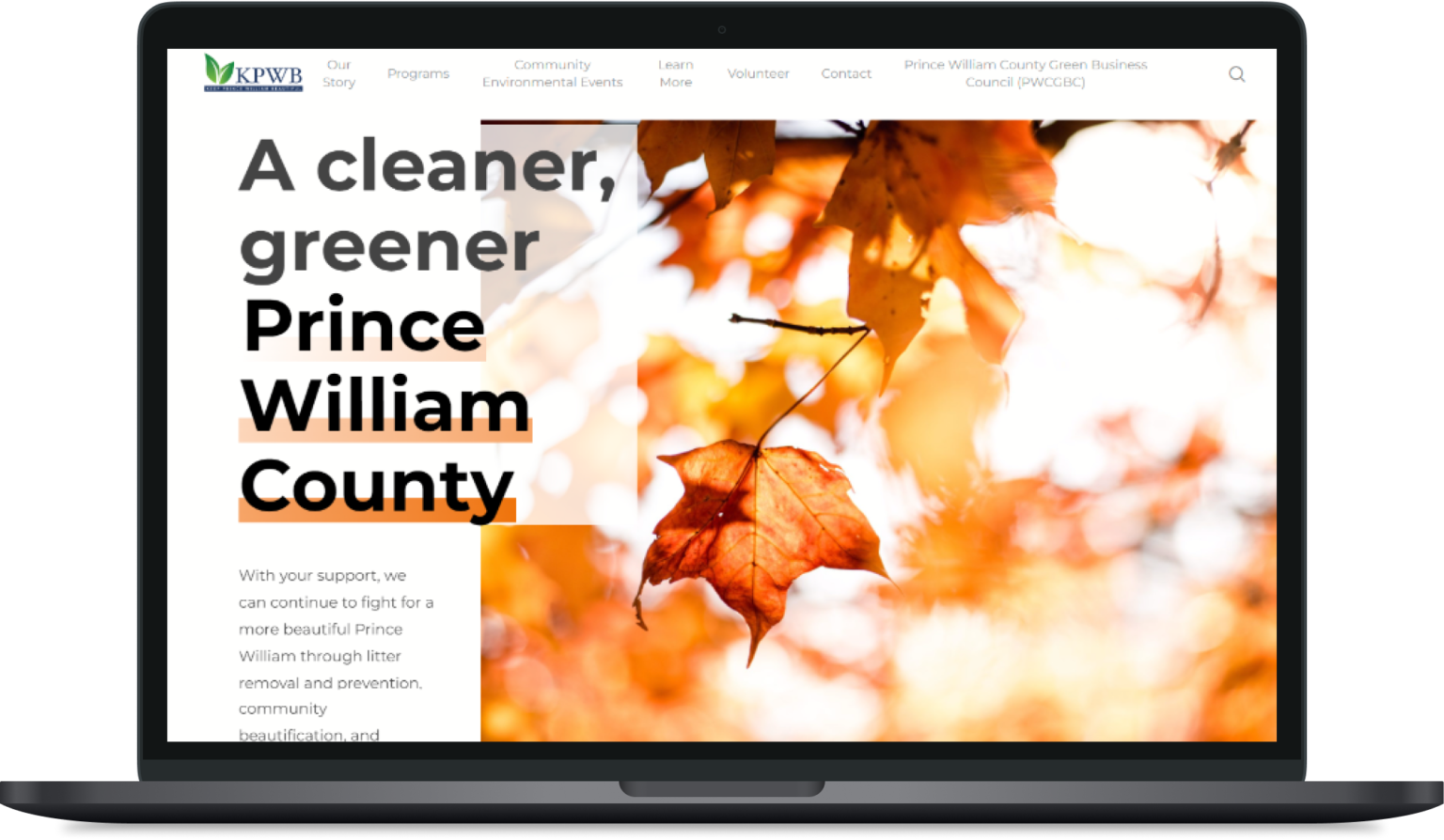
The Problem
An organization doing real work, invisible online.
KPWB was running cleanups, planting trees, and organizing community events across Prince William County — but their website was outdated, hard to navigate, and generating almost no organic search traffic. People who wanted to volunteer or attend events couldn't find the organization easily, and once they arrived, they couldn't find what they needed.
The redesign needed to serve multiple audiences — volunteers, donors, event participants, and community members looking for environmental resources — while dramatically improving search visibility.
How I Approached It
SEO and information architecture are the same problem.
I didn't treat SEO as a layer to add after the design was done. Search intent data shaped the IA from the start. The content hierarchy, page structure, and navigation were all informed by how people were actually looking for environmental organizations and volunteer opportunities in Prince William County.
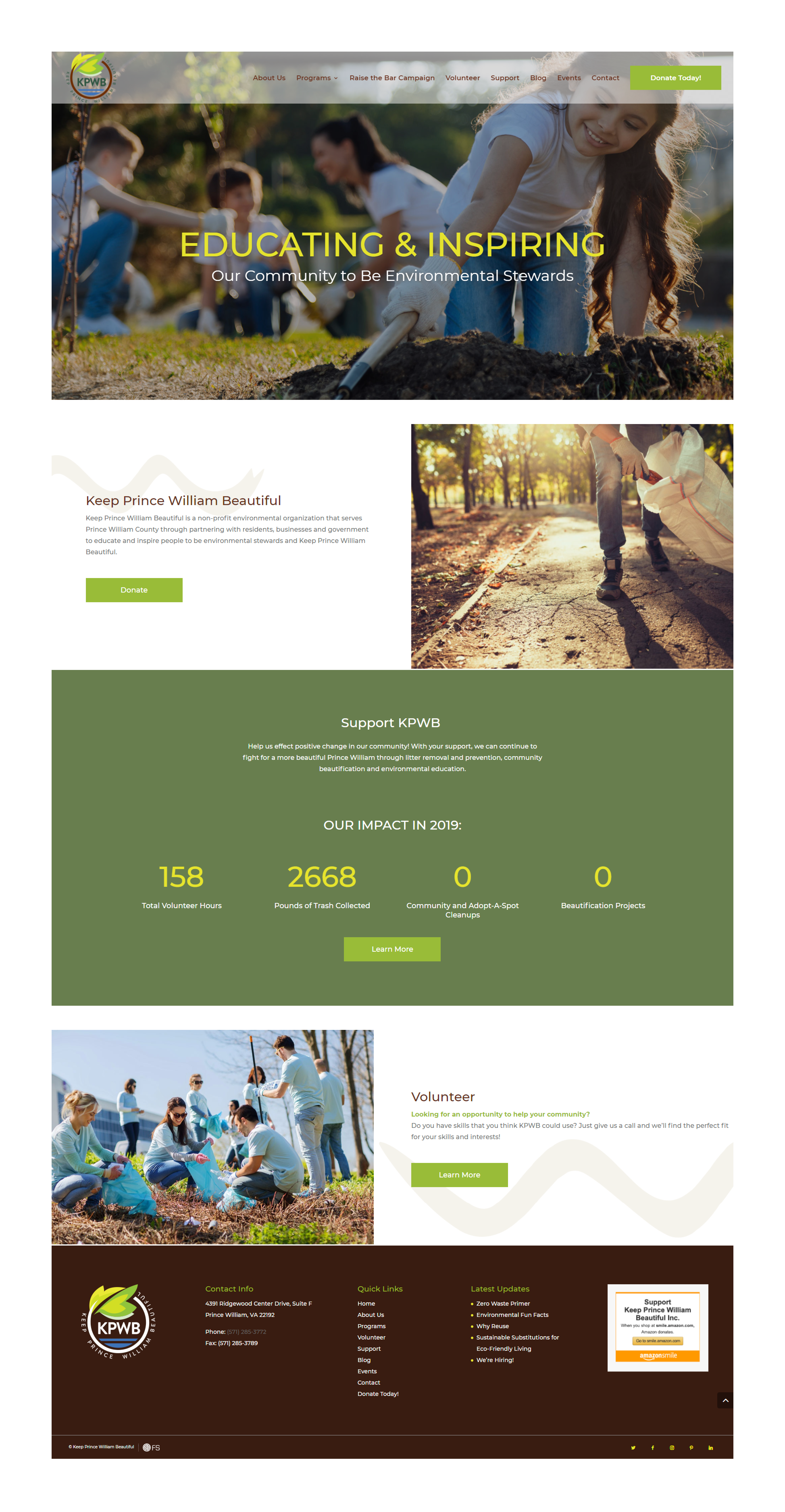
Navigation organized around internal org structure, not user intent. No clear paths for volunteers or event participants. Almost no search visibility.
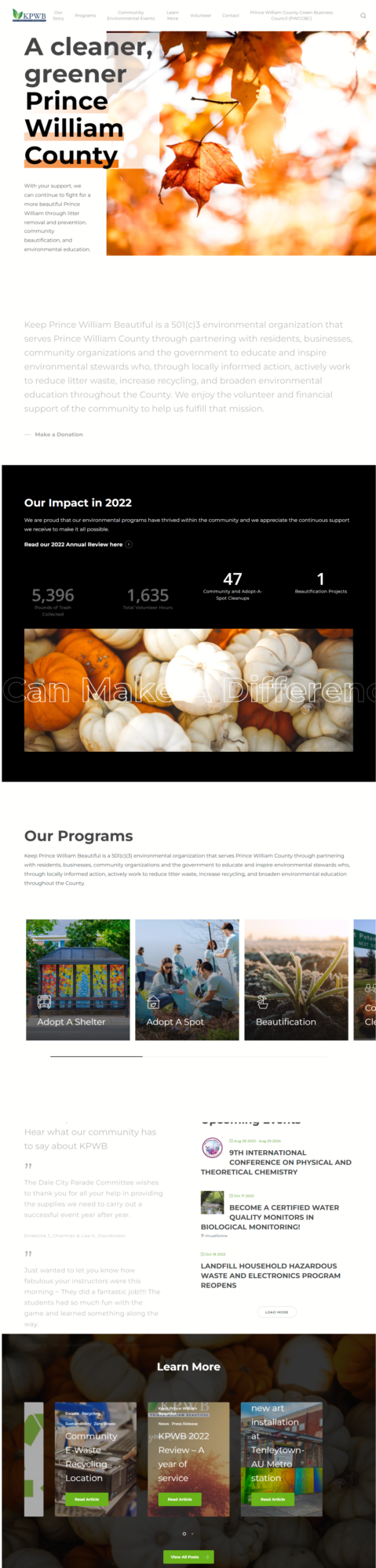
Navigation organized around how users searched for the organization. Clear paths for each audience segment.
The event calendar was a priority feature, not an afterthought. A recurring, up-to-date community resource would drive return visits in a way that static content couldn't — and for a nonprofit that lives on community participation, repeat engagement is everything.
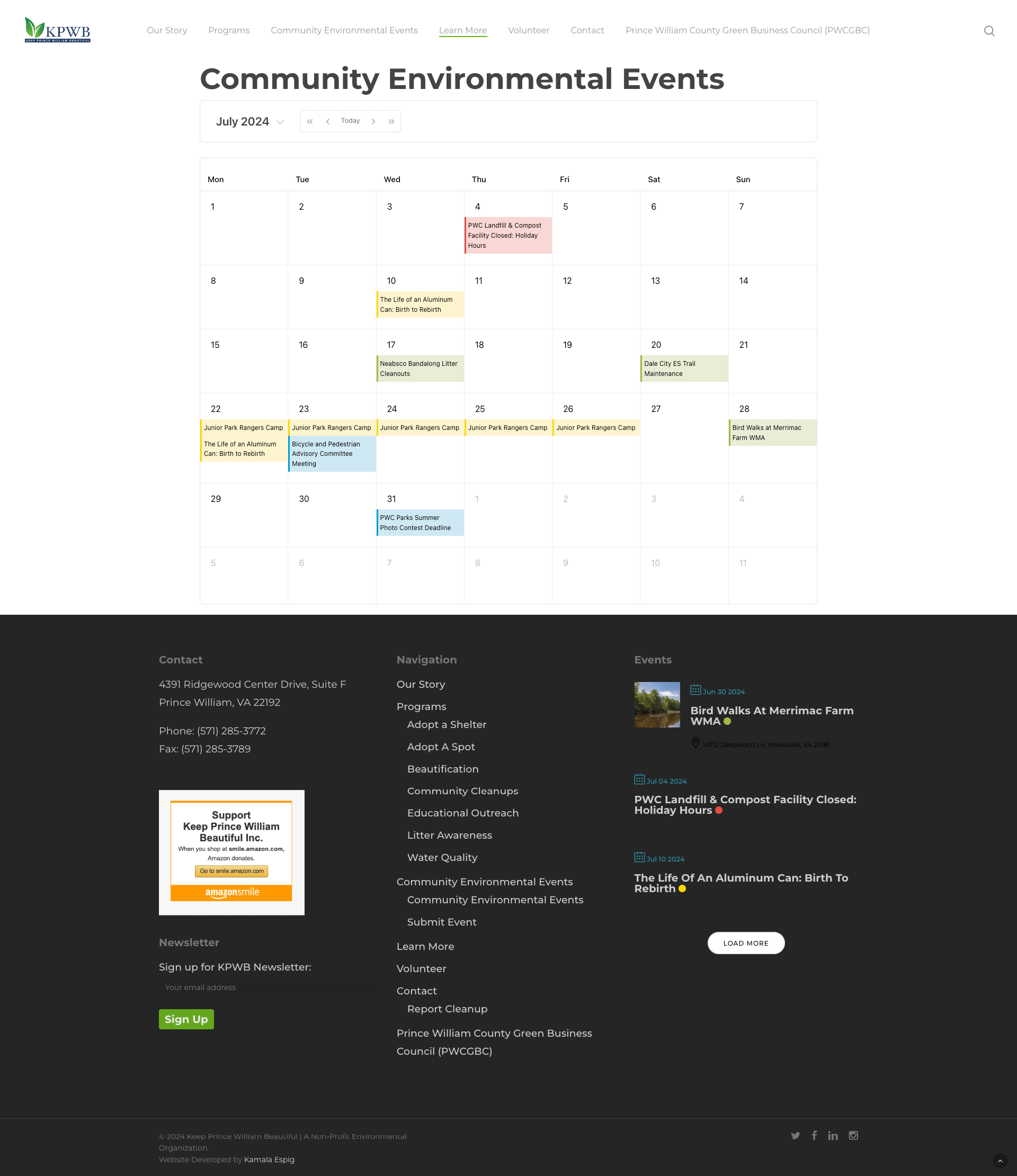
Prominent in navigation, easy to filter by type and date, with clear CTAs for each event. Not a plugin afterthought — a designed community tool.
Key Decisions
Three decisions that drove the results.
What I Took From This
What full-stack ownership taught me about designing for communities.
SEO and IA are the same problem. How users search for something is a direct signal for how that information should be structured. Treating them as separate disciplines misses the point of both.
Community engagement features drive return visits more reliably than content does. Build for participation, not just information.
End-to-end ownership produces better outcomes for clients who can't manage handoffs. When you're responsible for everything, the decisions compound productively.