Role

Lead UX Designer (sole designer on the initiative)

  • I owned the end-to-end UX strategy for the enterprise coverage foundation, including:
  • Defining mental models for coverage, confidence, and aggregation
  • Designing scalable layouts and hierarchy for dense data
  • Partnering with PM, engineering, and SMEs to balance accuracy and usability
  • Flagging UX risks where premature visualization could mislead users

This work required making what not to ship just as explicit as what to ship.

I led UX strategy and design for the foundational enterprise coverage experience at Tidal Cyber, enabling security leaders to understand coverage, gaps, and confidence across multiple environments—without drowning in operational detail.

This work established the design patterns, mental models, and guardrails that later enabled executive reporting, coverage aggregation, and scalable expansion of the platform.

Impact at a Glance

  • Enabled executive-level visibility into complex coverage data
  • Reduced misinterpretation risk in high-stakes security decisions
  • Created a foundation for future rollups, comparisons, and analytics

Status: Shipped foundation; capabilities expanded over time

Problem

Enterprise customers needed to reason about security coverage across many tools, environments, and frameworks—but the existing experience forced them to evaluate maps one at a time, at an operational level.

This created real risk:

  • Executives lacked a reliable way to assess overall coverage confidence
  • Analysts struggled to explain gaps without deep walkthroughs
  • Sales and onboarding required heavy verbal explanation

The business needed a way to surface signal without oversimplifying reality.

Press Release

The Challenge

What Made This Hard

  1. Coverage ≠ certainty
    Aggregating coverage data risks implying false precision if UX isn’t careful.
  2. Multiple audiences, one surface
    Analysts, security leaders, and executives all needed different levels of detail.
  3. Framework diversity
    Not all frameworks behave the same; forcing uniform visuals would mislead users.
  4. Scalability pressure
    The design needed to support future comparisons, rollups, and metrics—without redesigning from scratch.

Design Decisions & Tradeoffs

1. Prioritized clarity over completeness

Rather than expose every metric at once, the experience emphasized what matters first—with progressive depth for experts.

2. Designed framework-aware patterns

I recommended hiding or gating visualizations when a framework’s structure couldn’t be accurately represented—preventing misleading outputs.

3. Established executive-safe abstractions

Coverage confidence and gaps were framed in ways that supported decision-making without implying false accuracy.

4. Built for extension, not perfection

The foundation was intentionally modular, enabling later additions like rollups and comparisons without UX debt.

What Changed Because of This Work

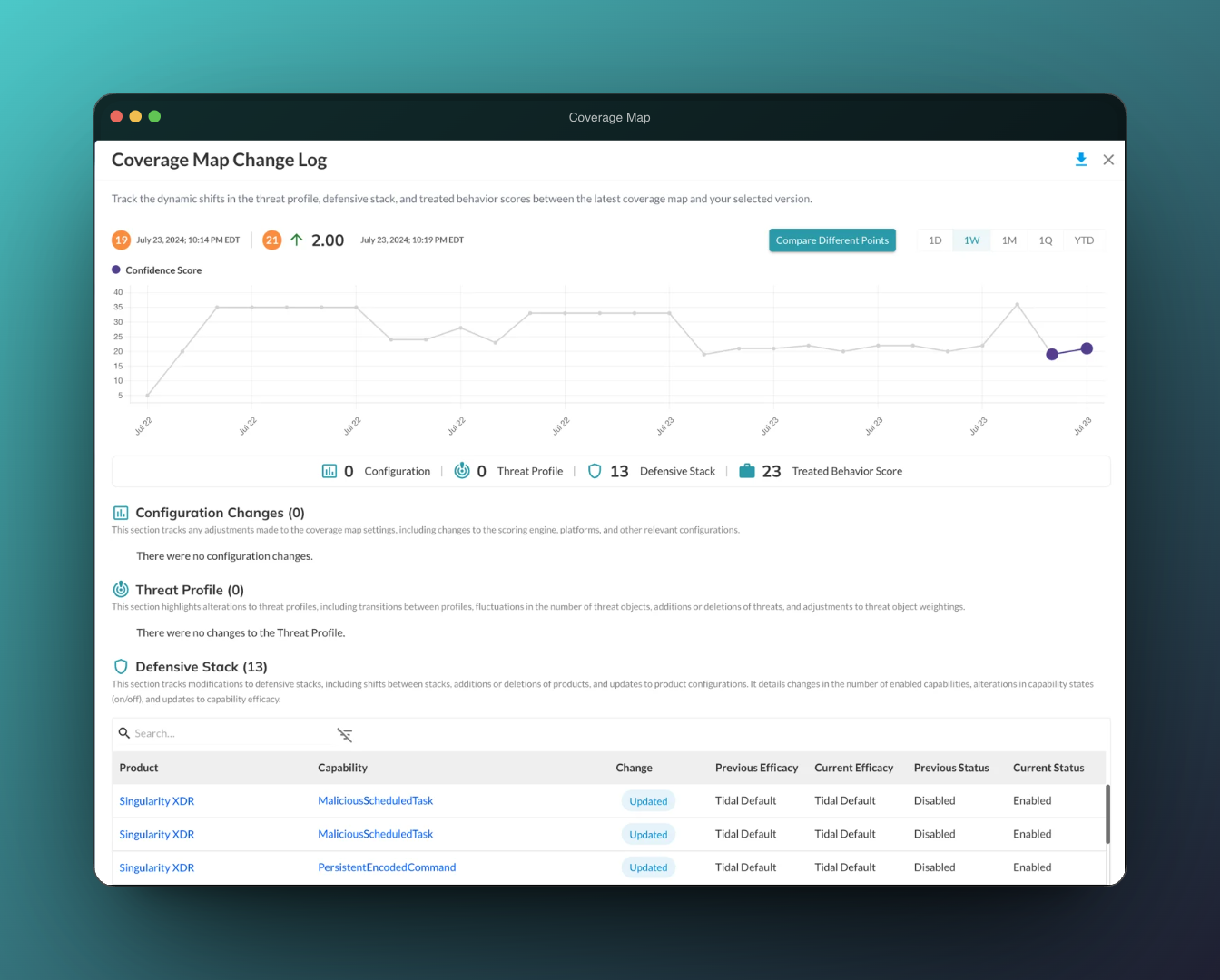
  • Executives gained a reliable way to discuss coverage without deep technical walkthroughs
  • Sales and onboarding improved through clearer, more defensible visuals
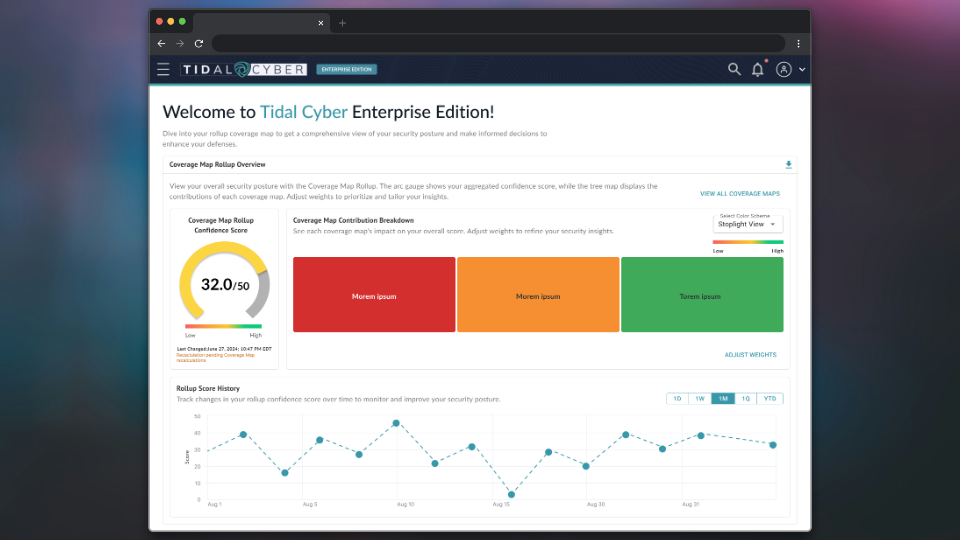
  • The platform gained a scalable UX foundation, enabling later features like coverage aggregation and confidence scoring
  • Risk of misinterpretation was reduced, protecting trust in enterprise contexts

Why This Foundation Matters

This work laid the groundwork for:

  • Aggregated coverage views
  • Executive-level summaries
  • Cross-map comparisons
  • Future confidence and reporting features

By investing in UX structure early, the product avoided costly redesigns later.

More Recent Work

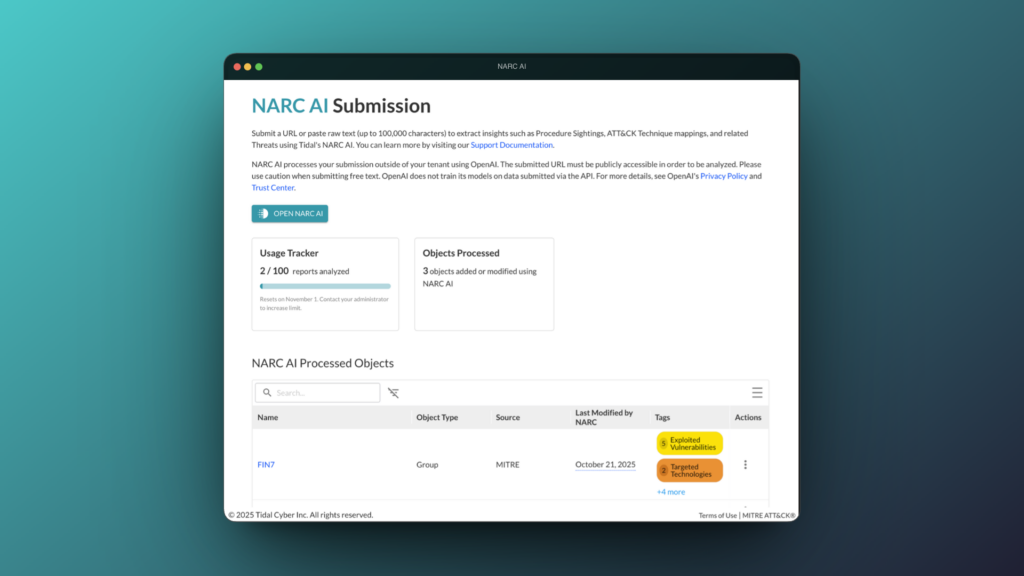
NARC — AI-assisted analysis for enterprise security teams

NARC — AI-assisted analysis for enterprise security teams

Read More
Expand Your YOUNIVERSE – Dell’s Global Immersive Marketing Journey

Expand Your YOUNIVERSE – Dell’s Global Immersive Marketing Journey

Read More
Boosting Community Engagement: KPWB Website Redesign and SEO Impact

Boosting Community Engagement: KPWB Website Redesign and SEO Impact

Read More
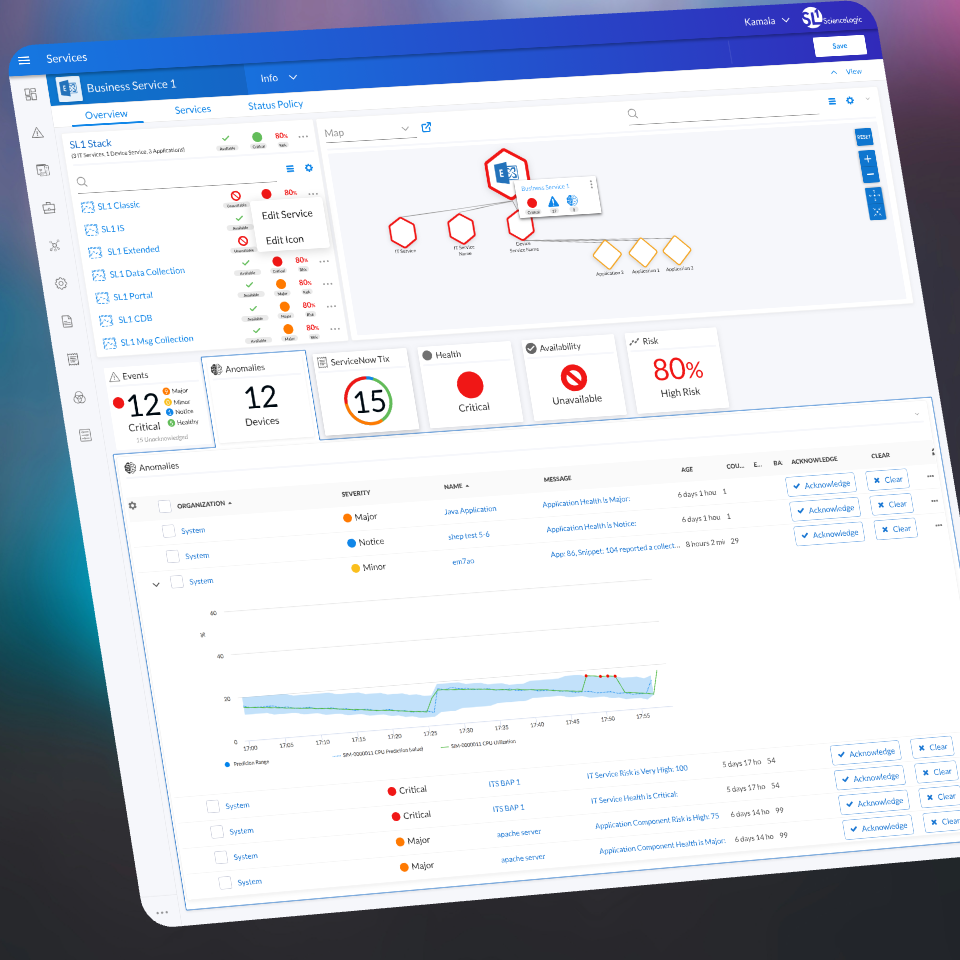
Revolutionizing IT Operations with Behavioral Correlation – ScienceLogic SL1

Revolutionizing IT Operations with Behavioral Correlation – ScienceLogic SL1

Read More