Dell Accessories SNP —
hypothesis-driven, outcome-validated.
Dell's Accessories homepage was a high-traffic entry point that wasn't converting. Rather than redesigning on instinct, I structured the work as a formal A/B test — defining what 'better' meant before designing anything, so the results would be unambiguous.
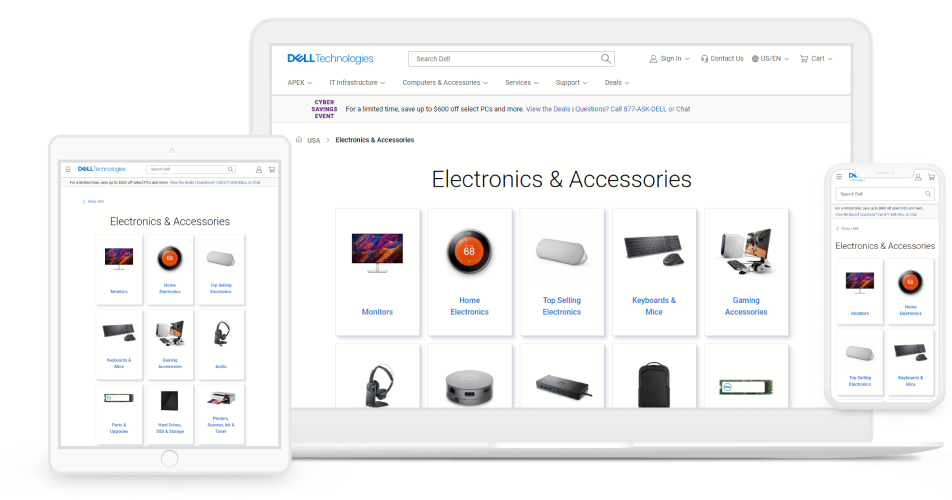
The Problem
High traffic, underperforming conversion, no clear theory for why.
The Dell Accessories homepage had accumulated design decisions over time without a coherent strategy. It was getting significant traffic but converting poorly. Nobody had a confident theory for what was wrong — which meant any redesign without a proper test structure would just be replacing one set of guesses with another.
Before touching the design, I defined success metrics across three categories: financial (Revenue Per Visitor, Average Order Value), engagement (time on page, scroll depth), and customer experience (masthead usage, exit rate). Recipe B would need to improve across all three to be validated.
How I Approached It
Audit against the metrics. Build a hypothesis. Design to test it.
I audited the existing page against each metric category — mapping where the current design was likely creating friction, missing intent signals, or failing to surface products users were ready to buy. Each identified problem became a specific, testable hypothesis. Recipe B was designed to test those hypotheses, not to be a better-looking version of Recipe A.
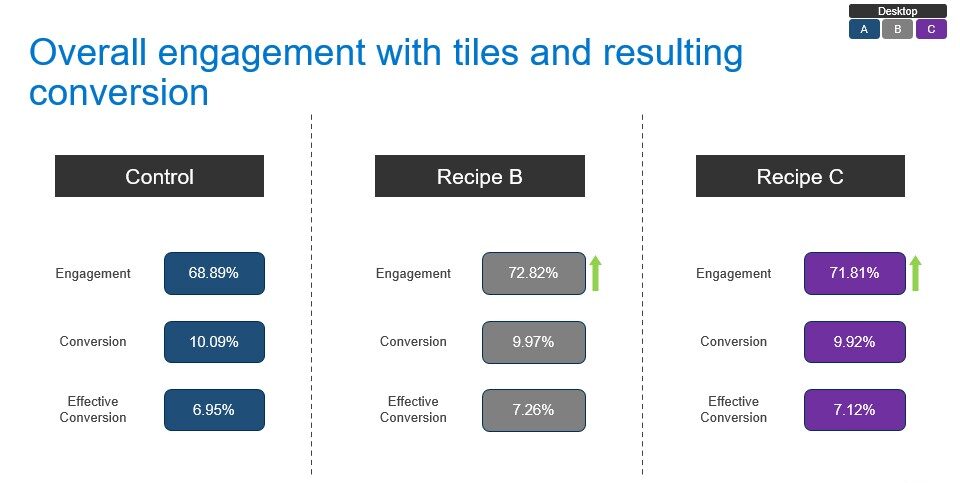
The page audited against each metric category. Each problem annotated with the hypothesis it produced and the corresponding Recipe B change.
One hypothesis drove the biggest changes: users visiting the Accessories homepage were often ready to buy systems — full setups including laptop and peripherals — not individual accessories. The existing page didn't support that intent at all. Recipe B surfaced system bundles prominently and restructured the hierarchy around that discovery.
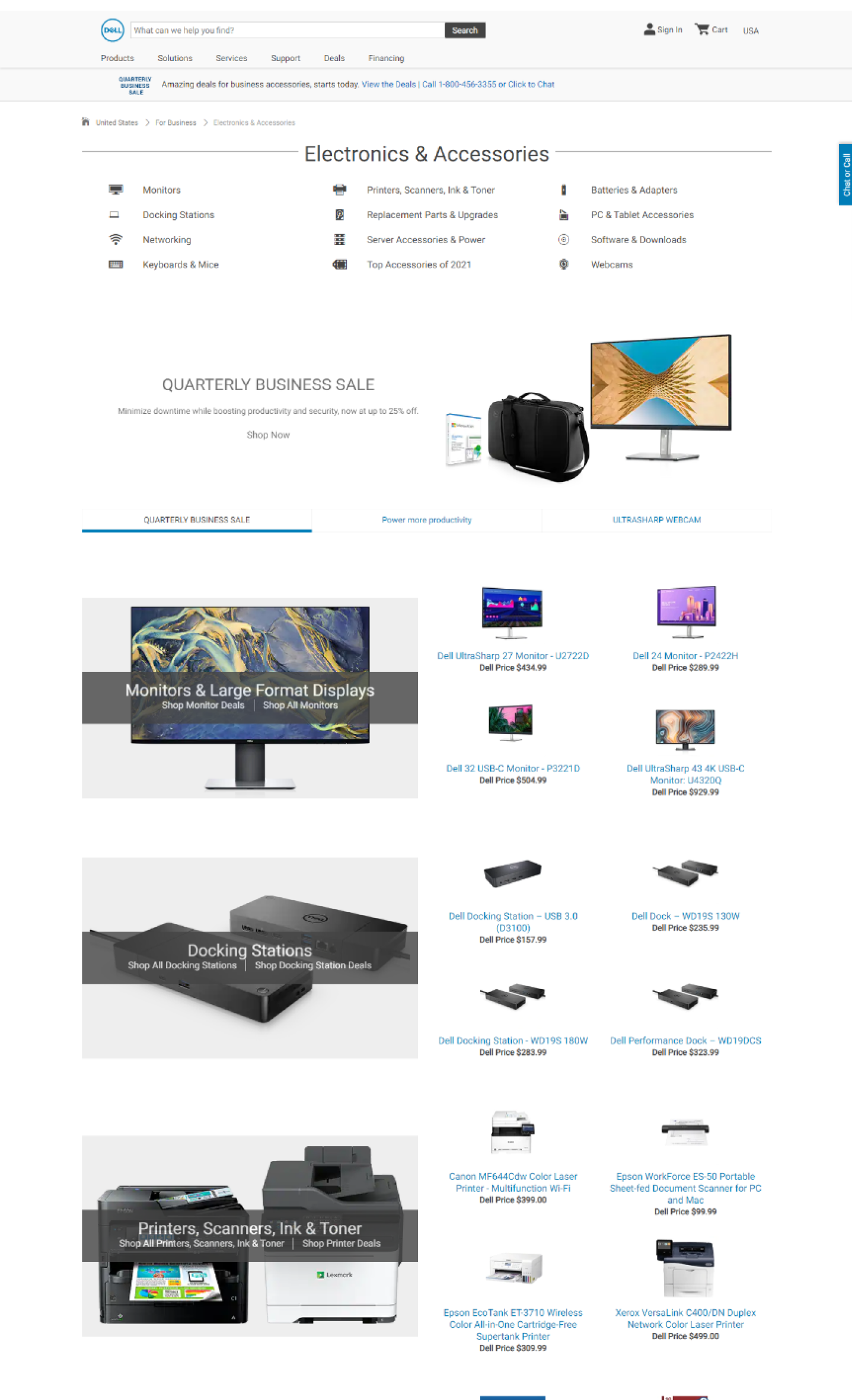
Friction annotated: unclear hierarchy, accessories without system context, no path for users with system purchase intent.
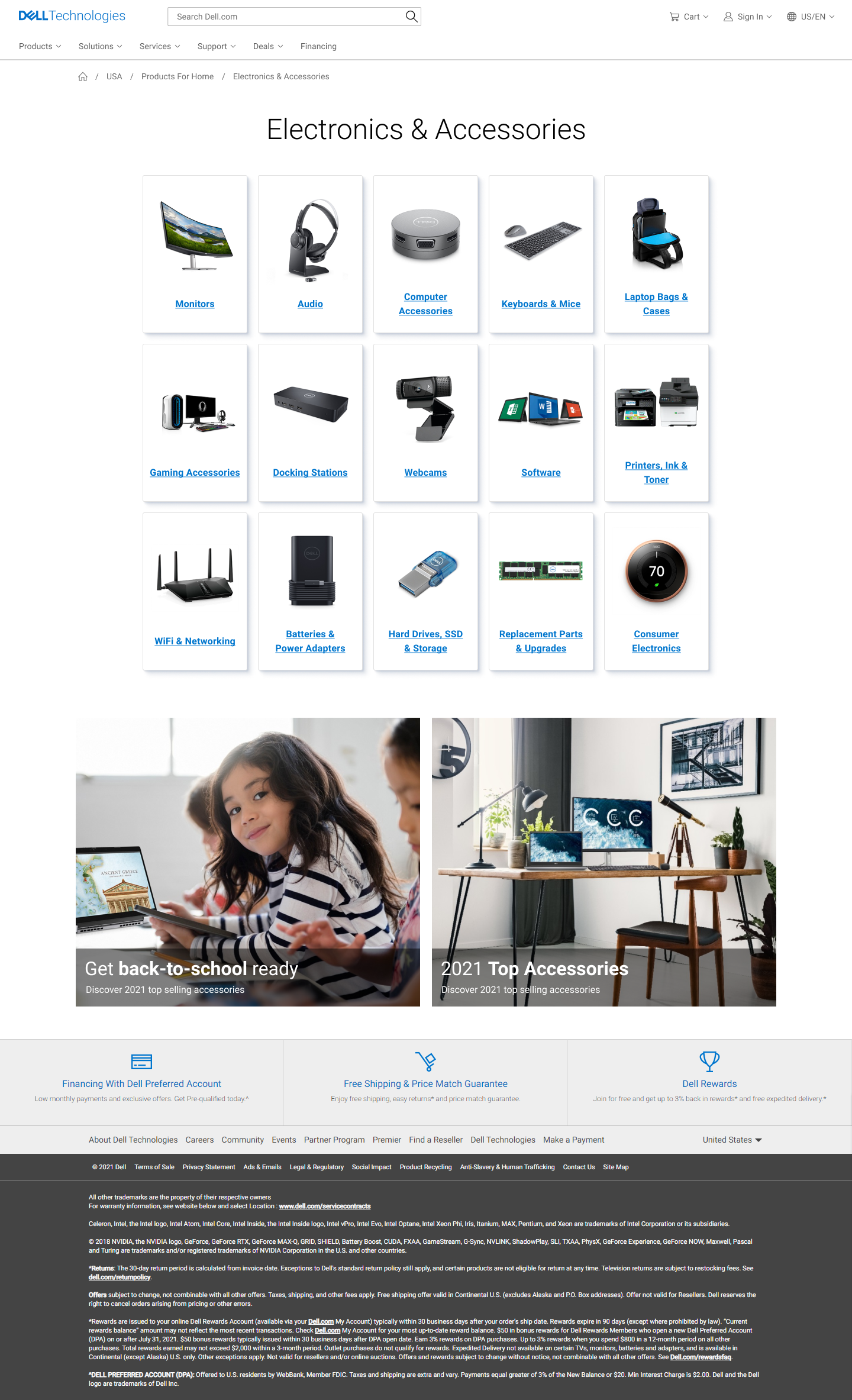
Each change annotated against the hypothesis it tests. System bundles surfaced; hierarchy restructured around user intent.
Key Decisions
Three decisions that made the test actually answer the right question.
What I Took From This
What structured testing taught me about design decisions.
Metrics defined before design are worth more than metrics collected after. One is testing a hypothesis. The other is confirming a decision you've already made.
A/B testing is a design skill. Structuring a test that actually answers the question you're asking — with the right metrics and the right hypotheses — requires as much thought as the redesign itself.
Intent signals in the data are worth pursuing. The system bundle hypothesis came from looking at what users were actually doing — not what the product team assumed they were there for.