Dell Technologies · Global Campaign · Case Study

Expand Your YOUNIVERSE —
Dell's most ambitious campaign of 2022.

A third-party agency brought the creative concept. Dell's internal engineering teams had to build it. I was the design lead in the middle — responsible for making sure what got built actually matched what was envisioned, across three phases, 12 months, and global markets.

Company
Dell Technologies
My role
Design Lead — Strategy & Implementation
Scope
Agency liaison · Systems · Delivery
Timeline
12 months · 3 phases · 2021–2022
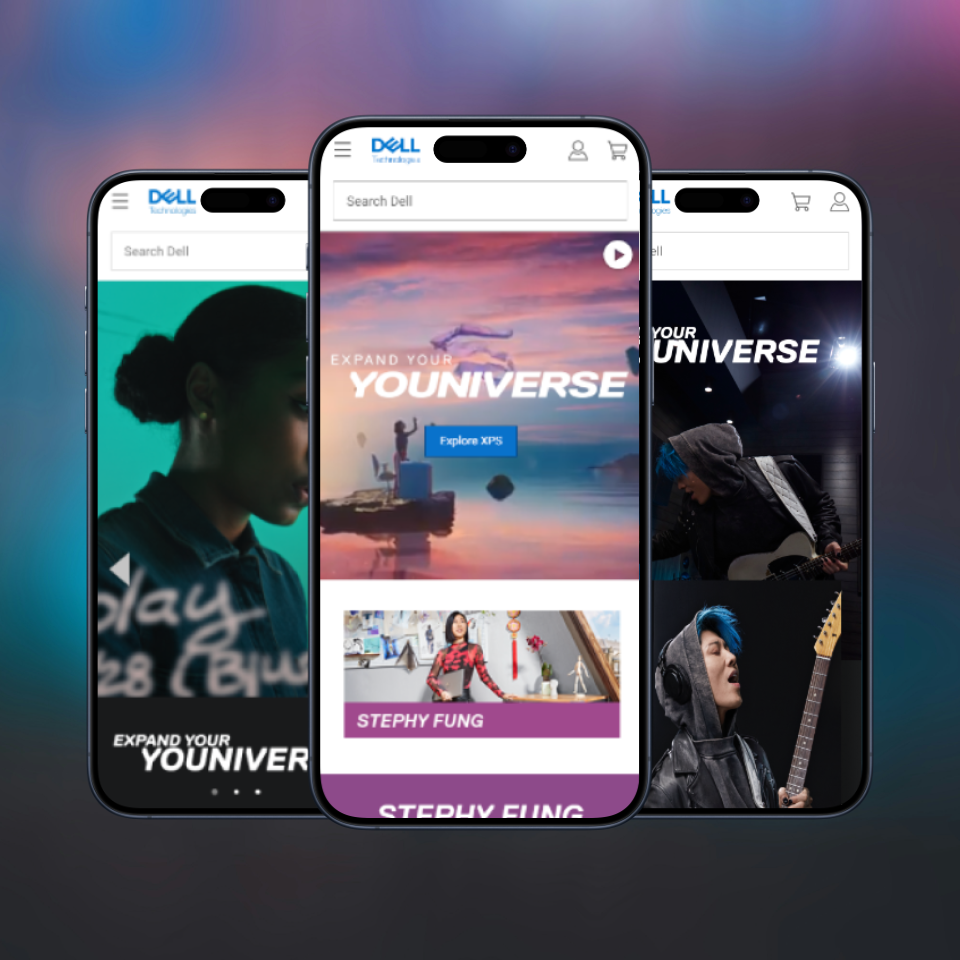
The live YOUNIVERSE campaign experience. Immersive, personality-driven, running entirely within Dell's AEM CMS and internal engineering constraints — exactly what the agency envisioned.
130%
Increase in user engagement — highest of any Dell initiative that year
28%
Improvement in component reuse across global Dell markets
The problem

The gap between agency vision and enterprise reality is where campaigns go to die.

Dell commissioned an ambitious interactive campaign targeting 18–34 year olds globally. The agency delivered a compelling creative concept — immersive, personality-driven, designed to feel unlike anything Dell had done before. What they hadn't designed for was AEM, Dell's internal CMS, Dell's global marketing workflows, or the engineering team that would actually build it.

My job was to close that gap. Not to water down the concept, but to translate it — finding ways to preserve the intent of the experience while working inside the constraints neither the agency nor engineering could see from where they were standing.

What made this genuinely hard
The agency was designing for the ideal. Dell's engineering team was building in the real. Both groups were right about their part of the problem. I had to hold both realities at once — which meant being fluent in the agency's creative language and in Dell's technical constraints to find solutions neither side could see.
How I approached it

Build the system in Phase 1. Scale it in Phases 2 and 3.

Phase 1 wasn't just the campaign launch — it was the component system. Rather than designing each market's version independently, I built a reusable library in Phase 1 that regional teams could configure and adapt. This was a deliberate choice to invest more upfront in exchange for significantly less work — and much higher consistency — across every subsequent phase and market.
Component system diagram
Component system — reusable modules, variants, and global market configuration options
The Phase 1 component library. Each module designed to be configured by regional teams — adapting language, imagery, and local content — without individual design involvement per market.

Phases 2 and 3 expanded the experience and rolled out to new markets. Because the system was already in place, new market implementations were configuration problems, not design problems. The 28% improvement in component reuse was a direct result of Phase 1 investment.
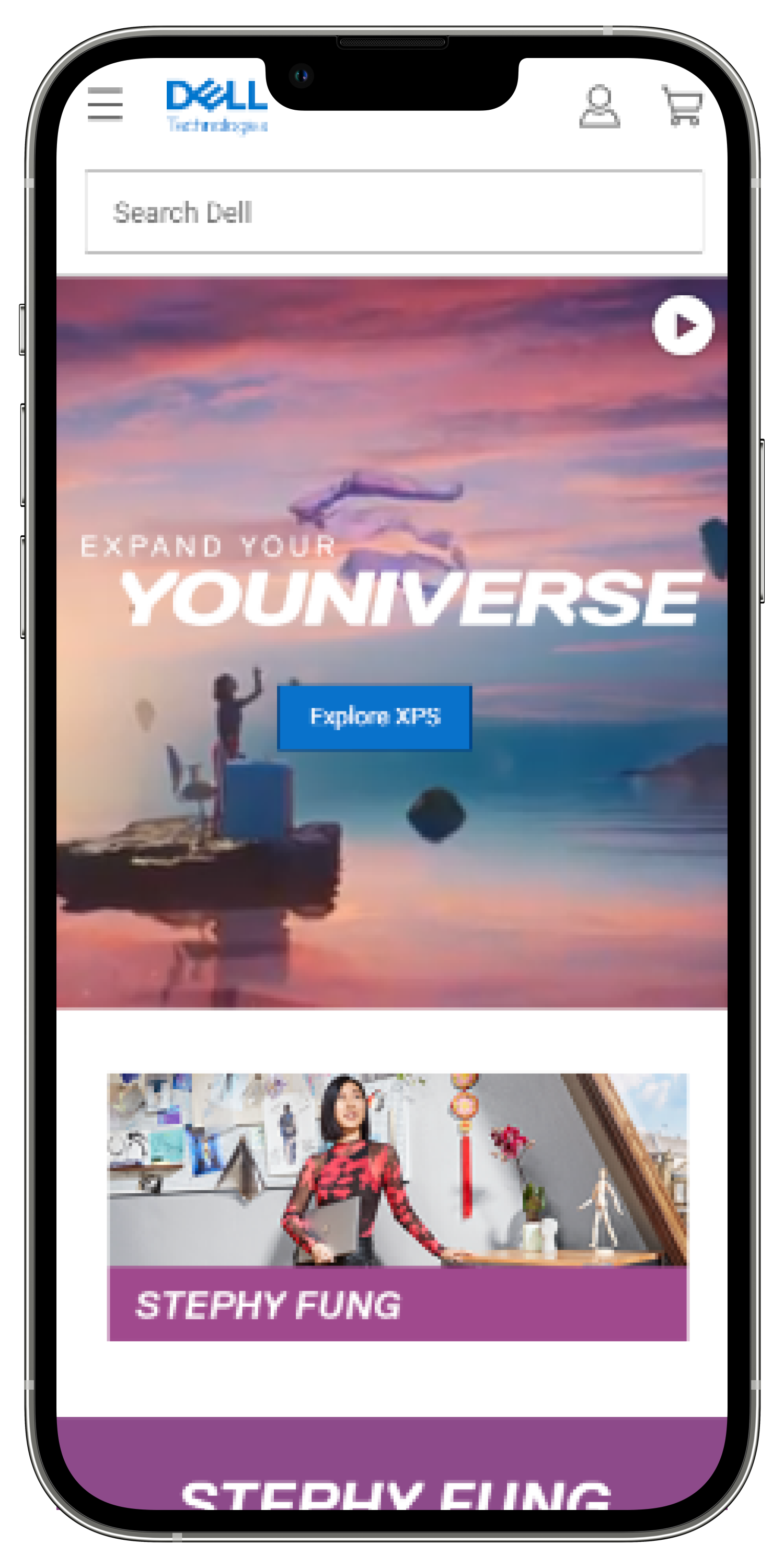
Phase 2 screenshot
Phase 2 — Interactive experience layered onto the established system
New interactive features added in Phase 2, built on Phase 1 components. No re-architecture required.
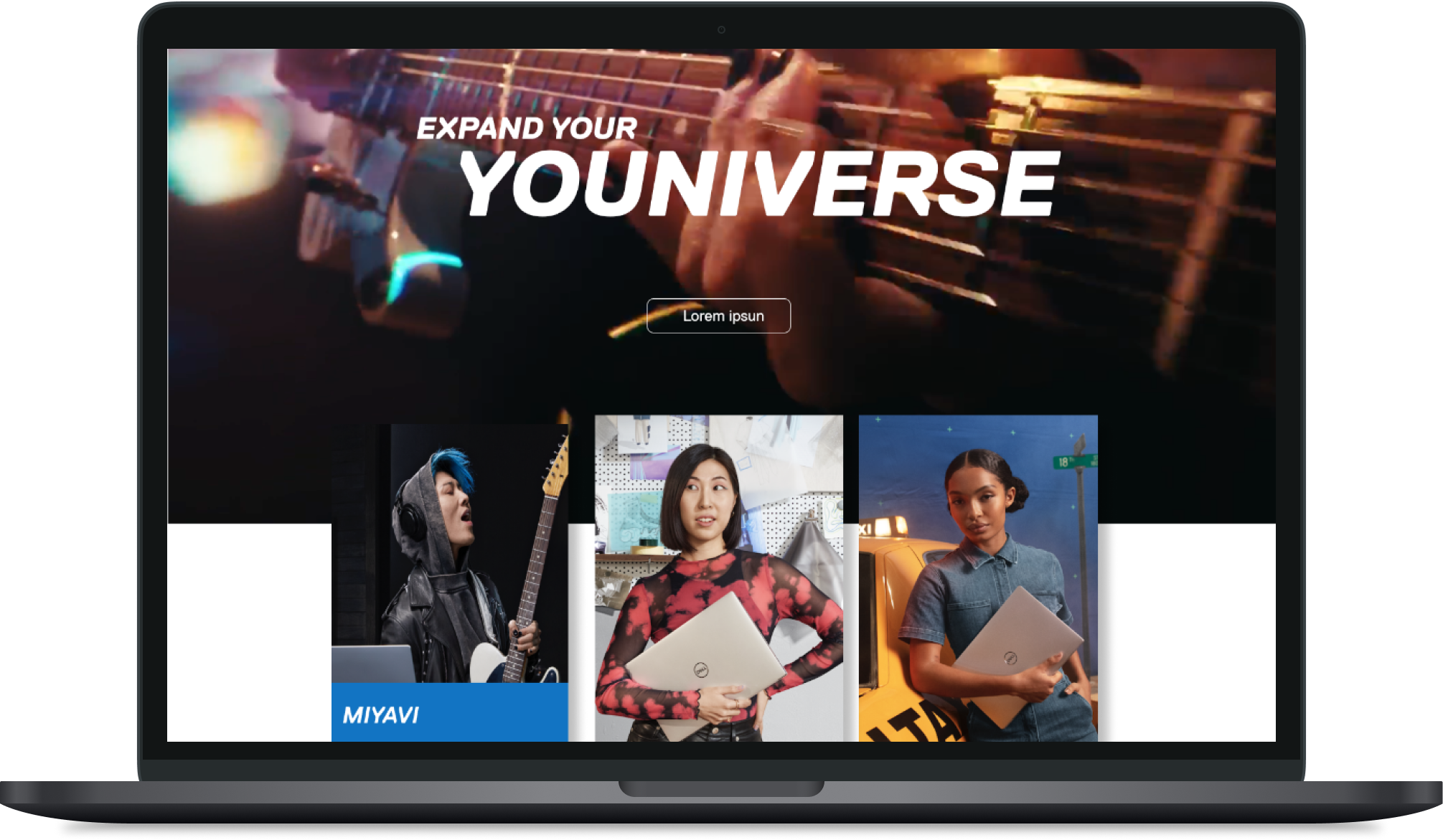
Phase 3 screenshot
Phase 3 — Global market rollout using Phase 1 component library
Phase 3 implementations. What previously required full design engagement now required configuration.
Key decisions
Treated phasing as a design strategy, not a PM constraint
Three phased releases gave us real user behavior data before committing to the next phase. Phase 1 was as much about learning what resonated as it was about launching. That data shaped decisions in Phases 2 and 3 in ways a single-launch approach would never have allowed.
Invested in the component system in Phase 1, not the individual pages
The temptation in Phase 1 was to design the most impressive version of the launch pages. I invested that time in the component system instead — which is why Phase 3 markets could be implemented at a fraction of the Phase 1 cost.
Found the negotiable elements in the agency concept
Not everything in the agency's vision was equally important to the experience. I worked with them to identify which elements were load-bearing for the concept — and which could be adapted to fit Dell's constraints without losing the point. That conversation required trust and a shared vocabulary we built together.
What I took from this
The translation gap between agencies and internal engineering is a design problem. It requires someone who can hold both realities at once — not someone who belongs entirely to either side.
Phasing is a design decision. Launching in stages lets you learn before you commit. It's also much easier to maintain exec confidence when there are visible milestones rather than a single long runway.
Component systems are the highest-leverage work in a multi-market campaign. The time invested in Phase 1 paid back on every page, every market, and every phase that followed.