Enterprise coverage foundations —
building the platform others would extend.
Before Coverage Insight could be redesigned, Tidal Cyber needed a coherent underlying model for what coverage even meant. This project established that model — the definitions, the rules, the IA — that every future coverage feature was built on.
The Problem
Every new feature was inheriting the same broken assumptions.
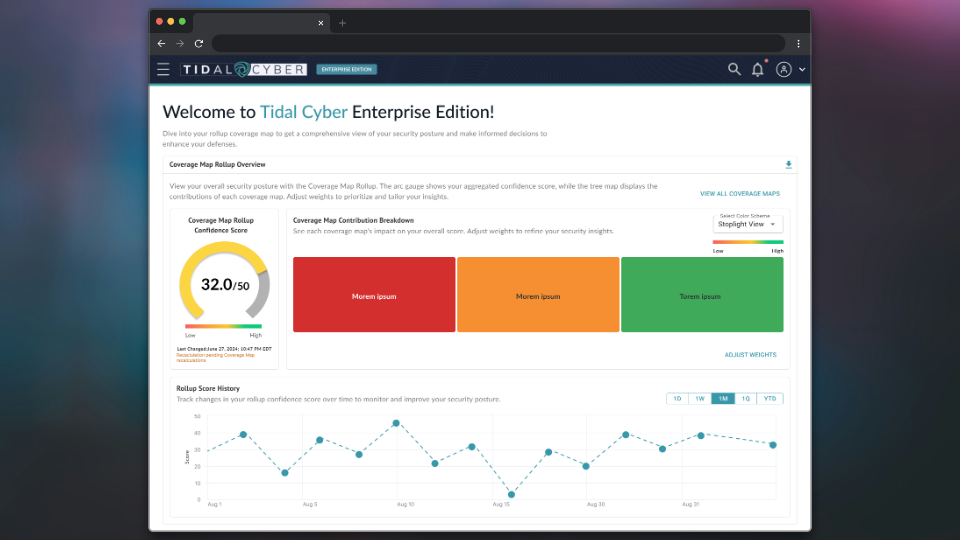
Coverage data appeared across the product in multiple places with no shared model underneath. Each surface used different language, different scoring logic, and different visual treatments for the same underlying concepts. Every new coverage feature had to make its own decisions about things that should have been decided once.
The result was a product that felt inconsistent, and a codebase where divergence compounded with every new feature. This wasn't a visual design problem. It was an architectural one.
How I Approached It
Audit everything. Define the model. Document it as a system.
I started with a full audit of every place coverage data appeared in the product — not just the primary surface, but exports, rollups, dashboards, and in-progress features. The goal was to find every inconsistency and trace it back to a missing or conflicting definition.
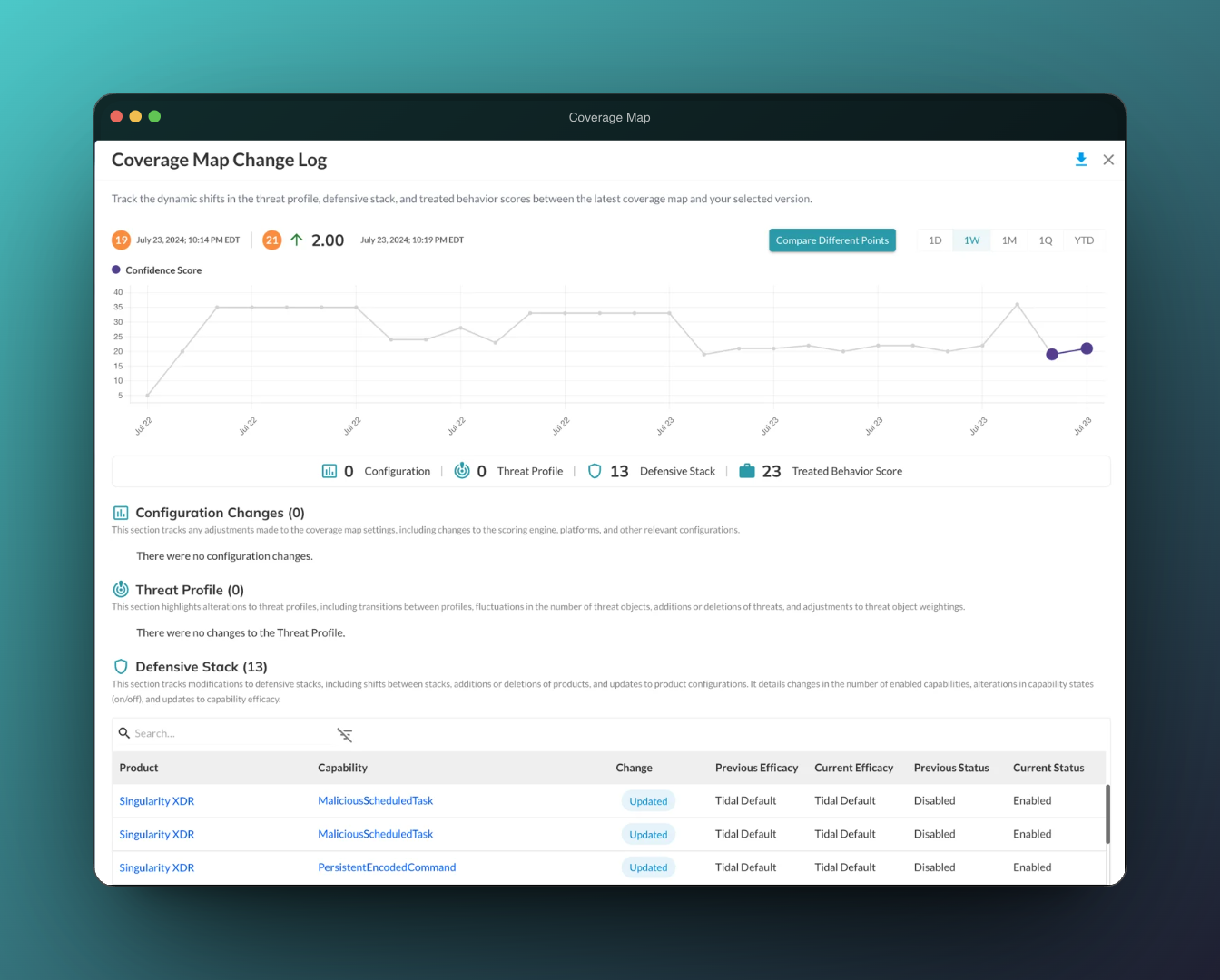
Each coverage-related surface audited side by side. Inconsistencies traced to the definition that was missing or ambiguous.
From there I worked with PM and engineering to define the core model: what a coverage score means at each level, how scores roll up, how gaps and confidence are represented, and what rules govern what should be shown when data is incomplete.
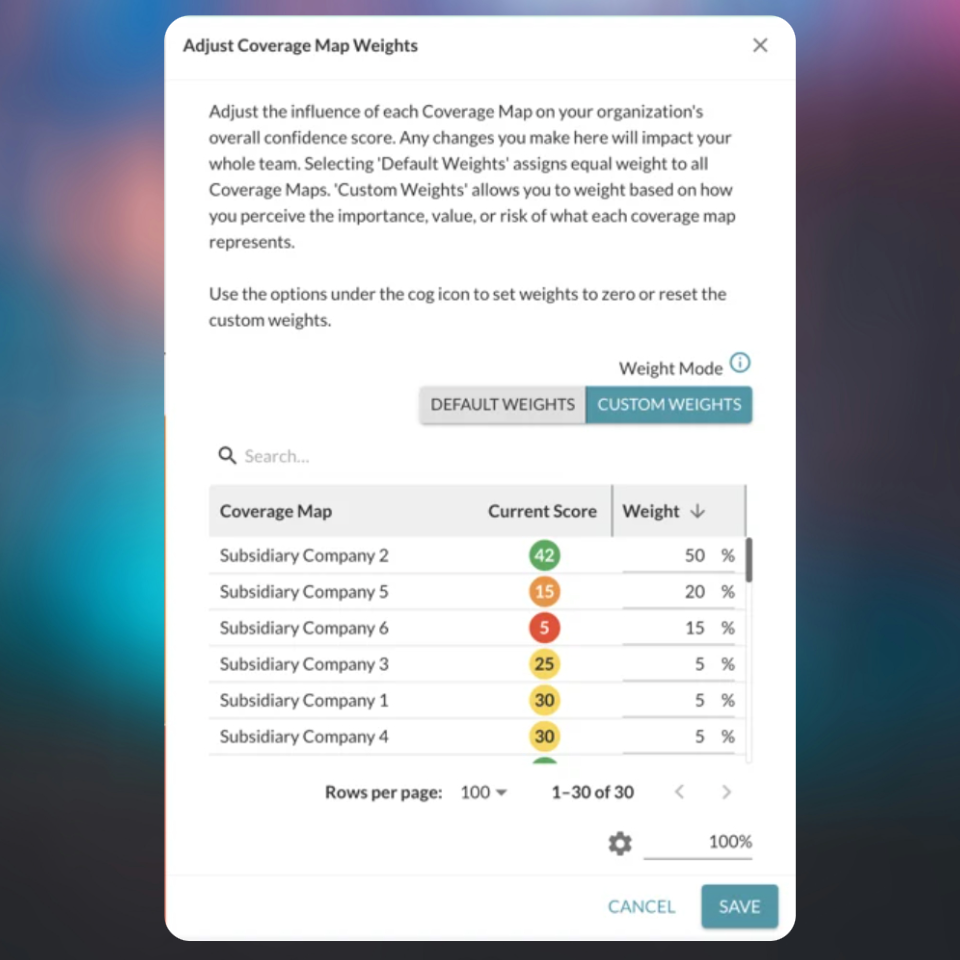
The model documentation that became the source of truth for all subsequent feature work — score definitions, rollup hierarchy, gating rules, and framework-aware logic.
Key Decisions